This probably should have come before Platforms, but I always knew it was going to be an Android game. Source control is usually the first thing I think about, because regardless of anything else you might do, you need to store files somewhere.
If you want to create all your design documents and spreadsheets with cloud tools, I get that. They're generally easy to use, and easy to collaborate with. But if any of those things produce artifacts that go into the build, you need to export them and check em into source control, because that online tool might change or go away.
I need my source control to handle large binary files in a sane way, because who knows what kind of bloated garbage those things are going to generate? While we're on the subject, artists also produce a lot of large binary files, and they too, have to go somewhere.
Everything is distributed/remote these days, so your source control system either needs to be fully network aware, or at least have a feature set that works well over a network. Don't forget, large binary files.
Automated tools will need to check things out, so there needs to be a CLI. Normies -- designers, artists, producers -- need to use it, so there needs to be GUI too, and it should be simple to use.
You need branches, and you probably need to be able to cherry pick changes from those branches from time to time. Maybe you can get away without it, but you'll be a lot less productive, I've seen the before and after.
You need logging and history. When your product actually ships, you'll be fixing bugs and it's easier if you can go through a file's history to see when that bug crept in.
Event hooks are nice. If your system can reject a submission based on a schema or other kind of validation, a lot of errors never make it through the door. You can have notifications, or do backups or any number of interesting things if you know when a specific file changes.
Enough about feature sets. It's decision tree time. What don't I like?
Discontinued/obscure: RCS, CVS, TFS. I especially don't like CVS or anything of that vintage, because it has to contact the server for everything, even just to do a diff. It's inefficient and frustrating, and nobody with any sense is still using any of these things.
Horror of horrors, I don't much like Git, either. The workflow is needlessly complicated, and it uses terms similar to other source control systems, but for different concepts. Sit down in the back, better people than you have tried to talk me into it.
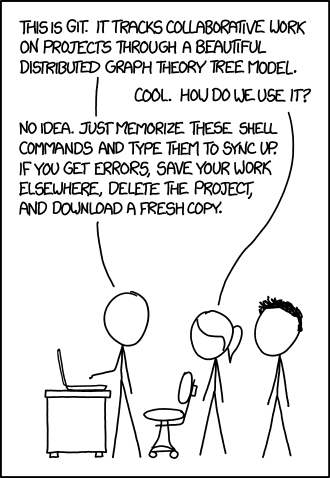
Source control systems that I do like are Subversion and Perforce. Subversion is extremely easy to teach to non-technical folk, and while Perforce is definitely not as easy, its power makes the slightly steeper learning curve worth the investment.
I use Perforce at the office, and it ticks all my boxes. I'm choosing it over Subversion because:
- It's change-centric instead of file-centric
- Cherry picking individual changelists is easy
- Shelving changes is easy
- The GUI, while occasionally... imperfect, has things like revision graphs and "time-lapse view" and I've forgotten what life was like without them.

Creality’s Sermoon V1 Pro is a plug-and-play 3D printer with security options useful for households, schools and libraries. Unlike low cost “toy” printers aimed at younger makers, this $539 deluxe machine delivers high quality results with a simple-to-use interface. Giant beds just like the one on the Kobra Max would be troublesome to stage by hand. Thankfully, Anycubic’s system makes it best trucking headset easy with a tough mounted mattress and an auto leveling sensor built proper into the hotend.
ReplyDelete